
Top Signs You Need Air Duct Cleaning Service – Don’t Ignore These
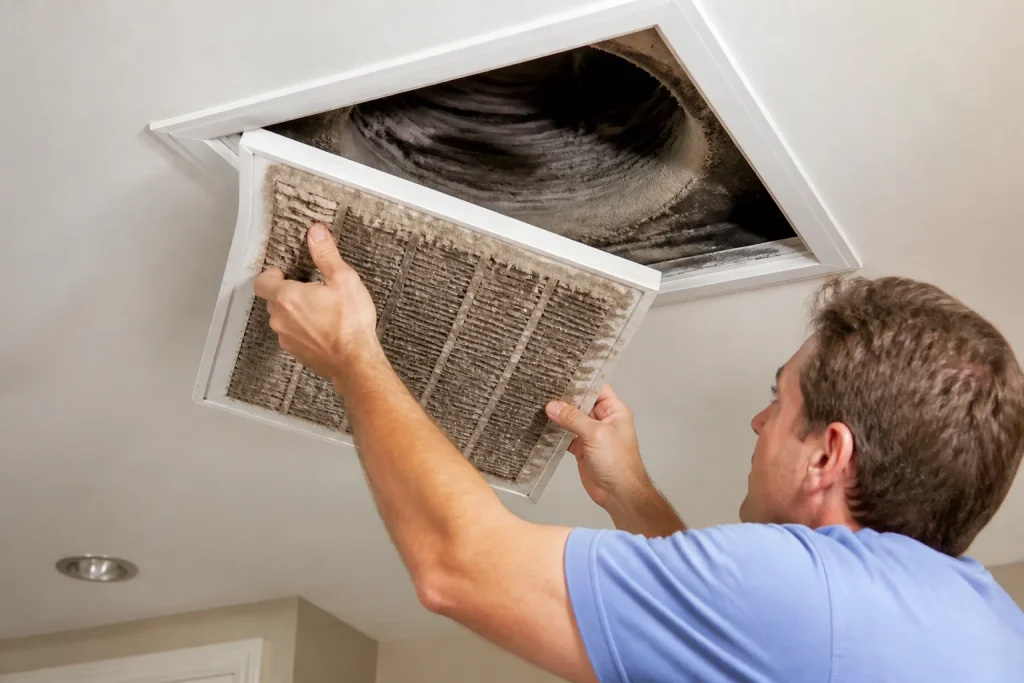
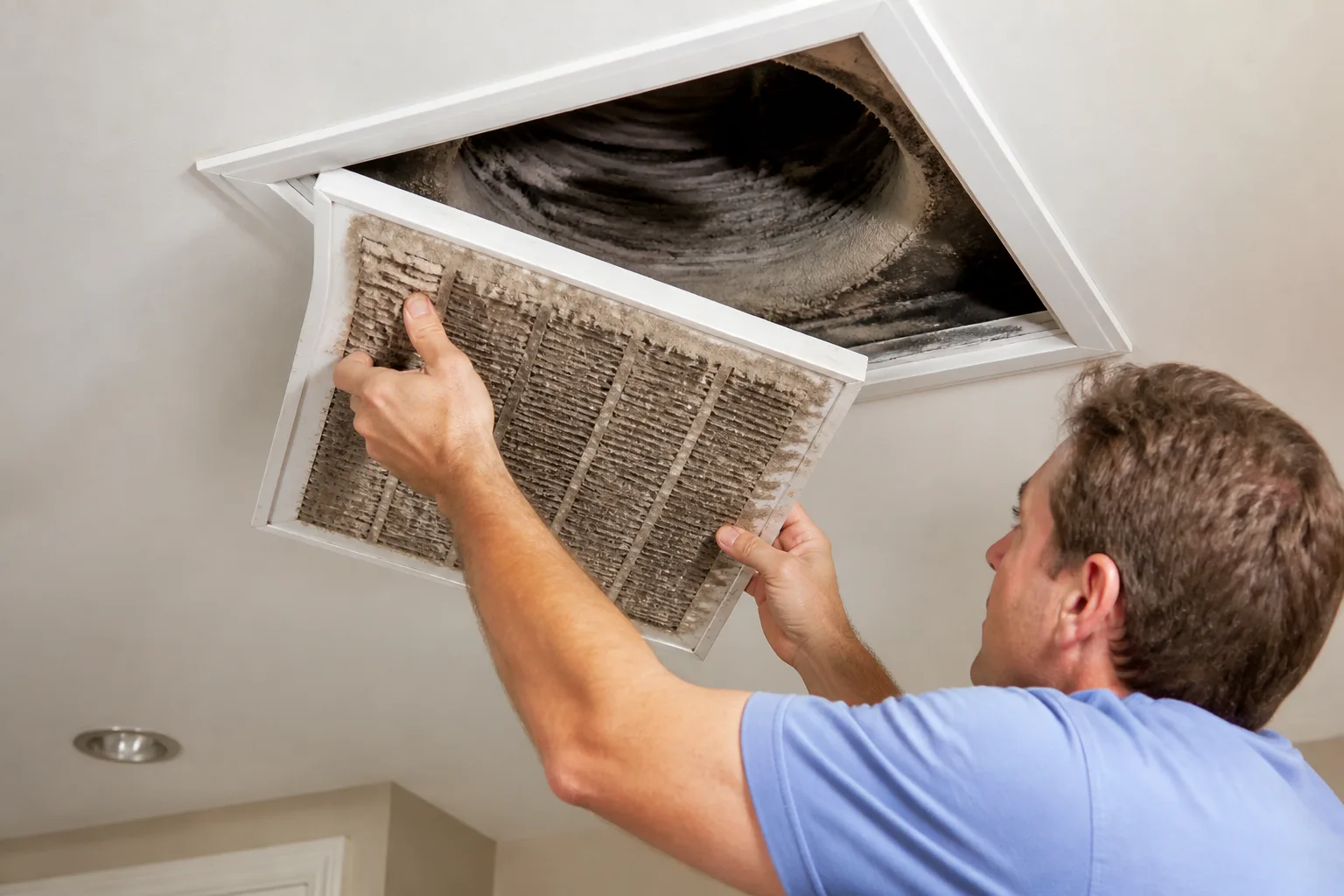
Dust on your supply registers is not a sign you need air duct cleaning. It’s usually a sign your filter isn’t catching particles before they reach the return, or that the register grille itself is collecting household dust on its slats. The signs that actually matter are subtler and more structural: airflow that’s gone uneven, a smell that comes and goes with the system, visible debris sitting inside the return boot. If you’d rather not crawl around with a flashlight this weekend, call (833) 637-5806 and we’ll take a look.
Most of what you’ll find on the internet under this topic is the same list recycled: “you see dust, you need cleaning.” We work on ducts across South Ozone Park every week, and in our experience the honest answer is more interesting. Half the homes we inspect turn out to have a dirty HVAC component, not dirty ducts. Cleaning the ducts in that case fixes nothing, which is why we diagnose before we quote.
Sign #1: The Problem Is in the HVAC, Not the Ducts
Here’s the distinction most lists skip. A dirty evaporator coil, a caked blower wheel, or a drain pan growing biofilm will produce symptoms that look exactly like duct contamination: weak airflow, musty air, higher bills. But no amount of duct cleaning resolves them. The coil has to be cleaned. The blower wheel has to be pulled and scrubbed. The pan has to be flushed.
How you tell the difference without pulling the air handler apart:
- Weak airflow everywhere at once. A restricted blower wheel or a clogged coil chokes the whole system evenly. Duct debris tends to hit specific rooms harder.
- Musty smell strongest near the air handler. If the odor concentrates around the furnace closet or mechanical room rather than at the supply vents, suspect the coil or drain pan.
- Coil frosting or short cycling. A dirty coil can ice up in cooling season. That’s an HVAC service call, not a duct cleaning job.
- Visible mat on the blower wheel. Shine a light through the blower compartment door if it has a service port. A furry film on the blades means the wheel needs cleaning.
This matters because a company that only owns a vacuum will clean the ducts and leave the actual problem sitting in the air handler. We handle both under one visit: the same trip that cleans the air pathway can clean the components feeding it. That’s what our HVAC cleaning covers, and it’s often the service a home actually needs.
Sign #2: South Ozone Park Triggers That Fill Ducts Faster
Duct contamination in South Ozone Park has local causes that a generic checklist won’t name. Three we see repeatedly:
Renovation debris from attached-home work. The attached and semi-attached homes common here mean one household’s renovation shares a wall, a chase, or a return plenum with the next. Drywall dust and construction grit migrate through shared framing and land in return boots. If a neighbor’s contractor has been cutting tile or sanding spackle for a month and your air got noticeably hazy, that’s a real trigger.
Pest activity in row house basements. Queens row house basements, especially the older ones with fieldstone or parged block walls, give mice and insects a route into the duct chase. Droppings, casings, and nesting material inside return boots are a genuine contamination signal. Duct cleaning here isn’t about dust, it’s about what the dust is mixed with.
Humidity-driven growth at the supply plenum. The supply plenum is the first metal box after the air handler, where cold air meets warm humid basement air in summer. Condensation on an uninsulated plenum is common, and where condensation sits, biological growth follows. It’s often the one spot in the system that genuinely needs sanitizing rather than just vacuuming. That’s the job of air duct cleaning paired with a proper sanitizer, which is why we use products from Abatement Technologies and Guardsman rather than a scented spray.
Sign #3: Do a Flashlight Inspection Before You Call Anyone
You can judge your own ducts in about five minutes, no tools required beyond a phone and a flashlight. Here’s the method:
- Turn the system off at the thermostat.
- Remove one supply register grille, ideally the one in the room with the weakest airflow. Most lift straight out or have two screws.
- Point a flashlight down into the duct and take a phone photo with the flash on. Photos reveal far more than a glance.
- Check the same for a return register.
- Look for: thick dust matting on the duct walls, debris chunks, visible growth, or animal droppings.
A light film of dust is normal and doesn’t justify a cleaning. What justifies a cleaning is matted dust you can see texture in, debris you could pick up, or growth. If the duct interior looks like a horizontal carpet, you’ve got a case. If it looks like a slightly dusty metal tube, you may not. Honest operators will tell you that and we do.
Sign #4: Airflow Imbalance Points to Restriction, Not Equipment
Rooms that are always too hot in summer or too cold in winter often get blamed on the system being undersized. Usually it’s not. It’s a duct problem: a crushed flex run, a disconnected boot, a joint that’s leaking 30% of its air into a wall cavity, or a balancing damper stuck closed.
You can test this yourself with a cheap handheld airflow meter, or with the tissue test:
- Hold a single sheet of tissue against each supply register while the fan runs.
- A strong, steady flutter means the run is delivering air.
- A weak flutter, or the tissue falling away, means restriction or leakage on that run.
- Compare one weak register against one strong one. The difference is the diagnostic.
If two rooms on the same floor behave completely differently, that’s restriction. Cleaning alone won’t recalibrate an imbalanced system, and that’s why we do duct repair and sealing alongside cleaning: we can find a crushed run or a leaking joint and fix it at the source, then verify the airflow is back. If you’re already leaning toward a service visit, our dryer vent cleaning is worth adding to the same trip, since a clogged vent is a fire risk and the same technicians cover it. We use professional equipment from Rotobrush and Nikro for both.
Sign #5: Smell Is the Most Reliable Diagnostic
Of all the signals we assess, smell is the most honest and the one most often misread. Each odor points to a specific source:
- Musty, damp-earth smell. Biological growth, typically at the supply plenum or an uninsulated basement duct run. Points to a sanitizing job plus moisture control, not just a vac.
- Burnt or scorched smell. This is an HVAC electrical issue, not ducts. Stop and call a technician. Do not keep running the system to see if it clears.
- Animal or ammonia smell. Pest activity, usually in the basement or return chase. Cleaning needs to follow pest removal, not precede it, or you’ll be doing it twice.
- Construction or chemical smell. VOC contamination from renovation migrating through the return system. Filtration and cleaning both matter. We use Abatement Technologies air filtration running during the cleaning to capture what we dislodge, not let it recirculate.
Odor is the signal we trust most for a reason: it reaches parts of the system no camera can, and it doesn’t lie about the source.
When to Call a Pro
DIY inspection is worth doing. DIY duct cleaning is not. The professional difference isn’t just the vacuum: it’s rotary agitation (Rotobrush), negative-pressure containment (Nikro), HEPA filtration to capture what’s dislodged, and the capability to repair and seal the duct while we’re in there. Consumer shop vacs don’t achieve any of that, and they can redistribute debris into the living space.
Call when you’ve confirmed two or more signs above, when a renovation has recently finished, when you’ve had pest activity, or when you smell a persistent musty odor. We provide before-and-after photos of your own ducts with every cleaning, so you can see the work rather than take a claim at face value. Our technicians have up to 9 years of experience. Estimates are free. Call (833) 637-5806. We answer 24/7. Fast dispatch from 7am to 7pm, Sunday through Friday.
The Bottom Line
The signs that actually matter aren’t dust on the grille. They’re airflow imbalance, smell, visible debris inside the return, and local triggers like renovation debris or pest activity. Cleaning won’t fix a dirty coil or blower wheel, so diagnose before you buy. When you do need cleaning, professional equipment and repair capability make the difference between a cleaned system and a displaced mess.
If you’re in South Ozone Park and want a real diagnostic instead of a sales pitch, Air Duct Cleaning South Ozone Park offers free estimates. Call (833) 637-5806. We answer 24/7, with fast dispatch from 7am to 7pm, Sunday through Friday. You can also learn more about our Air Duct Cleaning South Ozone Park services.
Frequently Asked Questions
Most homes here can go several years between cleanings. What shortens the interval is renovation nearby, pest activity in the basement, or a moisture problem at the plenum. Get a professional inspection if any of those trigger a smell or visible debris, rather than committing to a fixed schedule for its own sake. Call (833) 637-5806 for an exact quote. Estimates are free.
Only if the source is in the duct. Musty smells that concentrate near the air handler usually mean a dirty evaporator coil or drain pan, and cleaning the ducts alone won’t touch those. We inspect before quoting so we clean what’s actually producing the smell.
No, and it can make things worse. A shop vac lacks the airflow, containment, and agitation needed to dislodge attached debris, and it dumps disturbed particles back into the room. Professional systems from Rotobrush and Nikro work with containment and HEPA filtration to remove the material without recirculating it. Call (833) 637-5806 for an exact quote. Estimates are free.
Yes, and on a different schedule. A neglected dryer vent is a leading cause of residential fires. We treat it as its own dedicated service, and it’s the simplest safety call you can make. Call (833) 637-5806 for an exact quote. Estimates are free.
Written by the team at Air Duct Cleaning South Ozone Park.
Need Air Duct Cleaning Help?
Call Air Duct Cleaning South Ozone Park - the local pro we connect you with is licensed and insured, here with fast help in South Ozone Park.
(833) 637-5806