
Rotobrush Air Duct Cleaning in South Ozone Park: A Homeowner’s Guide
Most duct cleaning problems start with a gap nobody talks about. Standard setups use one tool to agitate dust off the duct walls and a separate vacuum to pull it away. In the seconds between those two steps, loosened debris drifts further into the system. Rotobrush combines the brush and the vacuum into a single tool, so loosened contamination is captured as it comes free. If you’d rather leave the work to trained hands, call (833) 637-5806. We answer 24/7.
How Does the Rotobrush BrushBeast System Actually Work?
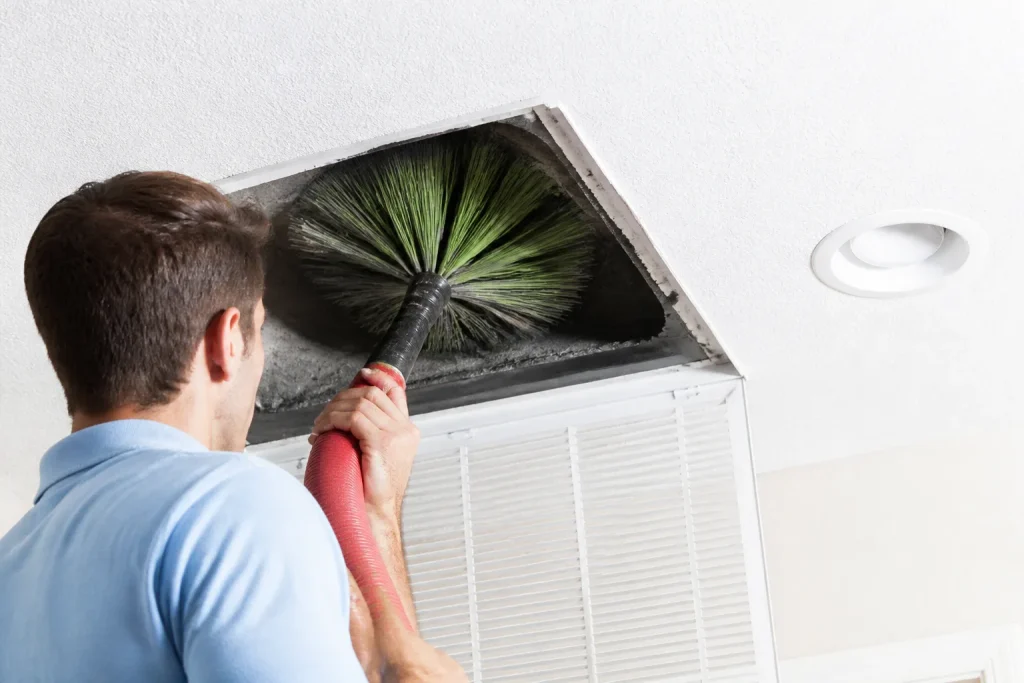
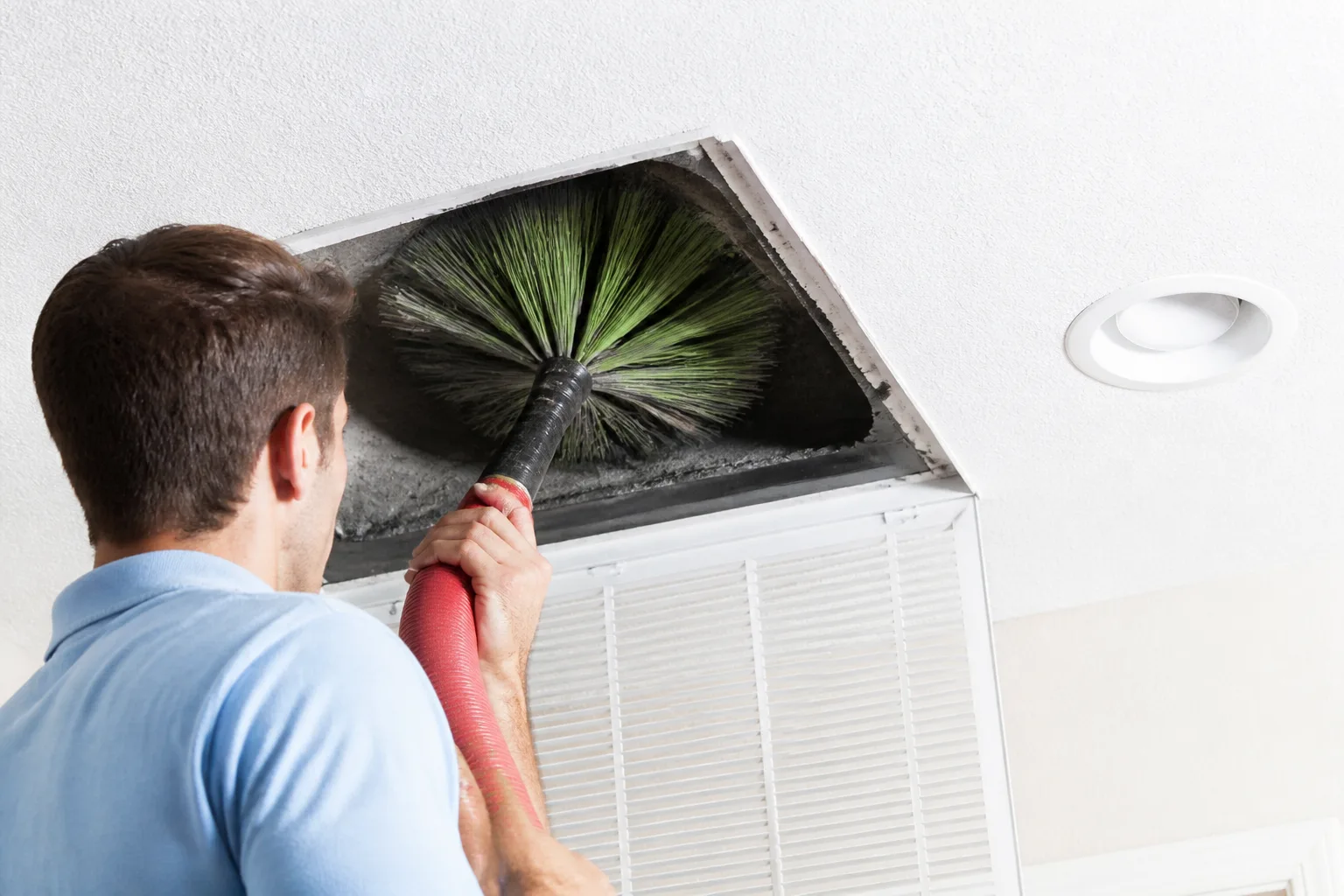
The Rotobrush BrushBeast is a rotary brush head attached to a flexible hose, and that hose is connected to a HEPA vacuum unit. The brush spins inside the duct, knocking compacted dust and debris off the walls, while the vacuum pulls that material into a sealed collection container at the same moment. There’s no waiting, no separate pass, and no window for dislodged debris to escape.
That integrated design is the whole point. Here’s the mechanics in plain terms:
- The rotating brush head contacts the duct wall directly, which is what it takes to break up material that has bonded to the surface.
- The HEPA vacuum runs continuously during brushing, capturing particles as they release rather than after.
- The sealed collection path keeps what comes out of the duct from ending up back in the room or further down the line.
Air-whip and air-sweep methods rely on compressed air to knock debris loose. They have their place, but air alone can’t scrape a wall. Where dust has compacted into a layer, you need mechanical contact. That difference shows up clearly in South Ozone Park, where a lot of the housing stock predates 1990 and the ductwork has had a long time to build up. Our technicians have up to 9 years of experience, and the tool that gets used most on that older ductwork is the rotary brush.
Which Ducts Does Rotobrush Handle Best, and Where Does Nikro Fit In?
Rotobrush works best on the branch lines and supply runs that feed individual rooms, which in most South Ozone Park homes means standard-diameter ductwork running from the main trunk to each register. The flexible hose follows the bends and offsets that residential ductwork makes, and the brush head handles the standard gauges you find in a typical house.
Where it gets paired with other equipment is the trunk lines and larger commercial-gauge systems. Those runs are wider, and the right approach is negative pressure: a Nikro HVAC cleaning unit pulls a strong vacuum on the whole system while the rotary brush works through the branches. The negative pressure keeps the entire duct network under suction, so anything the brush disturbs gets pulled toward the collection point instead of settling in a room. We run that same combination when a property manager in South Ozone Park needs a larger building handled.
Matching the tool to the duct is not a detail. A brush sized wrong for a run either misses the walls or stresses them. The point is picking the right method for what’s actually in front of us.
Why Do Pre-1990 South Ozone Park Homes Need Mechanical Brushing?
Dust that settles in a duct doesn’t stay loose. Over time, with the normal moisture and temperature swings of a working HVAC system, it compacts into a layer that adheres to the metal or flex duct wall. Air movement alone won’t lift it. Air-whip methods blow past it. What breaks that layer is physical contact, which is exactly what a rotating brush provides.
Homes built before 1990 in South Ozone Park tend to share a few things that matter here:
- Longer service life on the ductwork, which means more accumulated material and more time for it to compact.
- Older duct designs with more joints, transitions, and inside corners where debris collects first.
- Mixed duct materials across renovations, some of which hold dust differently than others.
In our experience, the older homes are the ones where a brush-only, vacuum-only, or air-only approach leaves the most behind. You can clean the surface of a duct easily. Getting the adhered layer off takes the right tool. Clean ducts start at the problem, not the surface.
What Should You See and Verify During a Rotobrush Service?
A proper Rotobrush job is something you can watch and check. You don’t need to be technical to verify it was done right. Here’s what to look for during and after the service:
- Access points. The technician creates or uses access openings at the trunk and at branch points so the hose can reach the full run. Ask where they are and confirm they get sealed afterward.
- Vacuum filter condition. The HEPA unit has filters, and they should be checked and changed as the work progresses. A clogged filter means weak capture.
- Before-and-after photos. A camera run inside the duct before and after shows what came out. Ask to see them.
- Airflow at the registers. After cleaning, airflow at each supply register should be checked. It should feel stronger and move more evenly than before.
- The collection container. What came out of the ducts should be visible in the machine’s collection bin.
For a fuller look at the process, see our air duct cleaning service, which covers the whole air pathway rather than isolated sections.
How Does Rotobrush Fit With Sanitizing and Sealing?
Cleaning is the first step, not the last. Once the ducts are clear, two things usually follow: sanitizing and sealing. Sanitizing addresses what brushing alone can’t reach, the microbial layer on duct surfaces that a mechanical brush loosens but doesn’t treat. We use products from Abatement Technologies for that step, applied after the ducts are clean so the treatment contacts a clear surface rather than sitting on top of dust.
Sealing is about the leaks found along the way. Duct runs in older South Ozone Park homes often have gaps at joints and connections that pull in unconditioned air and lose conditioned air on the way to the registers. Finding and sealing those breaches at the source is part of the job, not an add-on. Cleaning a leaky system without sealing it means the ducts get dirty again faster. From cleaning to sealing to sanitizing, the work belongs together, and handling it in one visit means nothing gets missed between steps.
When to Call a Pro
Some signs point to a system that needs a trained eye rather than a weekend project. Call a professional if you notice:
- Visible dust blowing from registers when the system starts
- A musty or stale smell when the heat or AC runs
- Uneven airflow between rooms that has gotten worse over time
- A dryer that takes longer to dry clothes than it used to
Duct interiors and HVAC components aren’t a safe place to improvise. Reach us at (833) 637-5806. We answer 24/7. Fast dispatch from 7am to 7pm, Sunday through Friday.
Related services in South Ozone Park: dryer vent cleaning for the lint buildup that makes dryers a fire risk, HVAC cleaning for the coils and components that handle the air, and the full Air Duct Cleaning South Ozone Park page for the complete range.
The Bottom Line
Rotobrush works because it closes the gap between loosening debris and capturing it, and that matters most in older ductwork where the buildup has compacted into a layer that air alone can’t move. If you’re in South Ozone Park and need help, Air Duct Cleaning South Ozone Park offers free estimates, and the written estimate sets the final price. Call (833) 637-5806 to get started.
Frequently Asked Questions
It depends on the size of the system and how many runs need cleaning, so there’s no single figure. The written estimate sets the final price, and there’s no charge for the estimate. A technician confirms the scope before any work starts, so the number you’re quoted is the number you agree to. Call (833) 637-5806 for an exact quote.
Rotobrush combines the brush and the vacuum in one tool, so debris is captured the moment it’s loosened. Standard setups agitate with one tool and vacuum with another, which leaves a gap where loosened material can migrate. On older South Ozone Park ductwork, that gap is where the dirt ends up.
Most residential jobs take a few hours depending on how many runs and how much buildup is present. Larger systems with trunk lines cleaned under negative pressure with Nikro equipment take longer. The technician can give a realistic timeframe once they’ve seen the system.
It depends on the home, not a fixed schedule. Older houses with more debris history, pets, or recent renovation work tend to need it sooner. If you’re seeing dust blowing from registers or smelling something musty, that’s the sign to have it checked. Call (833) 637-5806 to book a look.
Written by the team at Air Duct Cleaning South Ozone Park.
Need Air Duct Cleaning Help?
Call Air Duct Cleaning South Ozone Park - the local pro we connect you with is licensed and insured, here with fast help in South Ozone Park.
(833) 637-5806